
Where to Put a Perfume Vending Machine, and Where Not To
The wall decides what the machine earns. What the spot needs physically, which rooms suit it, and the five places that look obvious and are not.
Sean Puente, SpritzUp 7 min read
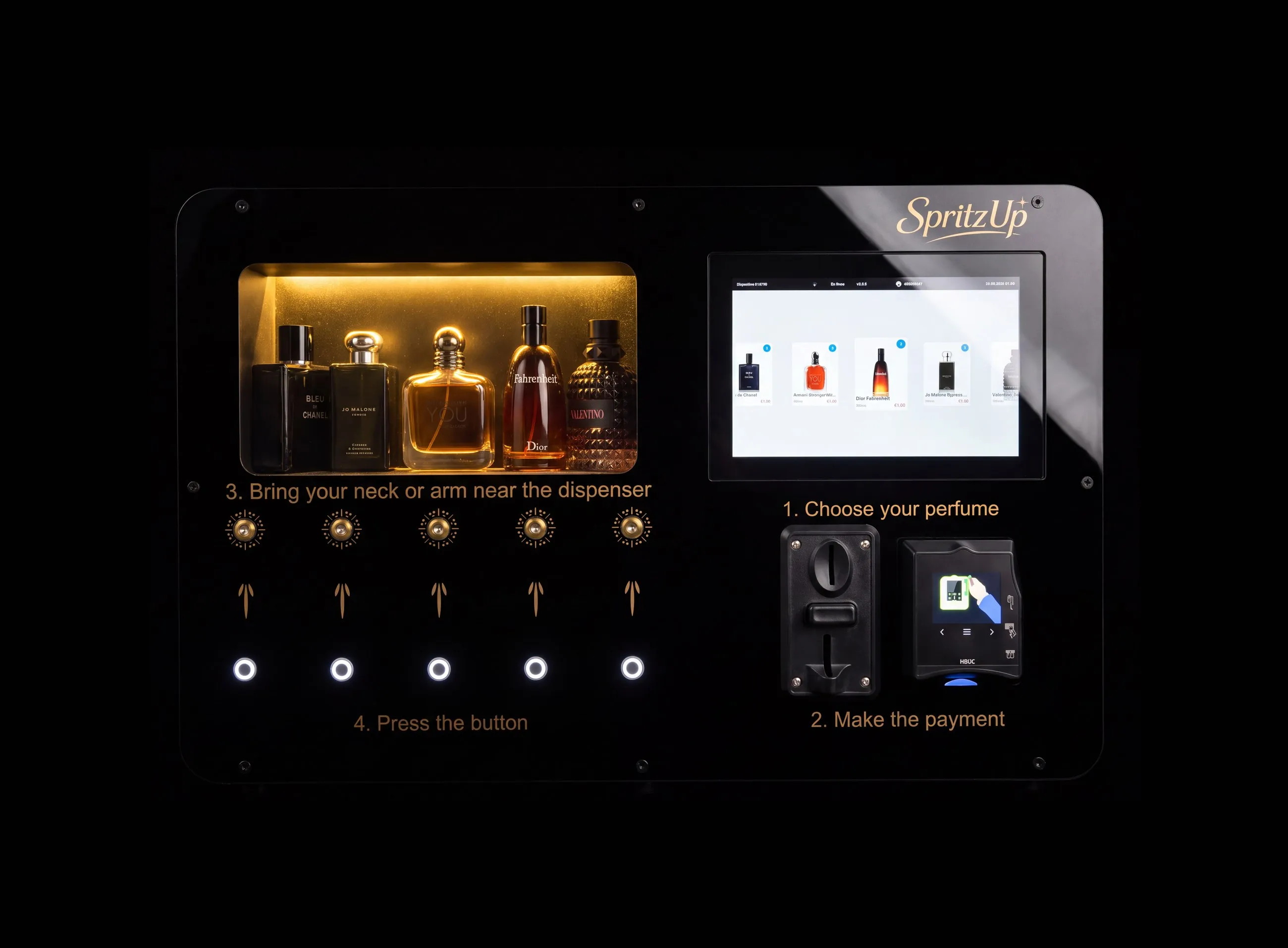
The wall decides what the machine earns. Not the venue, not the footfall figure the owner quotes you. The wall.
Put the same machine on two different walls of one room and you get two different businesses. Same building. Same people walking past. I think this is the most underrated decision in the whole purchase.
This is what to look for before anything gets drilled. Full size, price and how it works are on the perfume vending machine page.
The moment you are actually selling
Nobody buys a spray because they walked past a machine. They buy because they are about to be looked at… and that is the whole product.
Hold that idea and every placement question you have answers itself.
So you are not hunting for the busiest wall in your building. You are hunting for the spot where your customer is twenty minutes from walking into a room and wanting to be seen. Those are different walls, and the busy one is often the wrong one.
Think about where that moment happens:
- Coming out of a washroom, back towards the floor
- Leaving a gym, going straight on somewhere
- A hotel lift lobby, on the way down to dinner
- Waiting at a bar to be served
- The last stretch before a padel or tennis court exit
Every one of those is a person checking themselves. That is your customer, and they are already thinking about it before they see the machine.
What the wall physically needs
Short list, and it rules out fewer of your options than you would expect… because the machine takes no floor at all.
| What | Requirement |
|---|---|
| Machine size | 69.3 x 45.0 x 13.8 cm |
| Weight | 28 kg |
| Wall needed | About 50 cm of clear width |
| Depth into the room | 13.8 cm |
| Power | A socket within reach |
| Floor space | None |
| Packaged size for delivery | 81 x 57 x 30 cm |
Twenty-eight kilos matters. I would want a fixing into something solid, not a stud wall with a single plug and hope. Ask first.
Depth matters too. At under 14 cm it sits close to the wall, so it works in a corridor where a free-standing unit would block people. That is the reason these end up in places a normal vending machine never could.
And it needs a socket. Obvious. It is still the thing that kills a perfect wall on install day, so check it before you promise the venue anything.
How high to hang it
Nobody talks about this. I think it changes your takings more than the room does.
The screen is what sells. If your screen sits at chest height, people look down at it and most of them do not look at all. If it sits at eye level for somebody standing, they read it without deciding to.
So hang it so the screen meets the eyeline of an average standing adult, then stand where your customer will stand and check. Not where you are standing while you fit it, because you are close to the wall and they will be two metres back.
One more thing you should test before drilling. Stand at the far end of the room and see whether you can tell what it is. If you cannot, nobody else will either, and you have bought a machine that needs explaining.
Stand where they will stand. That is the whole test.
Sightline beats footfall
Here is where I think most people get it wrong.
You ask the venue how many come through on a Saturday. You take the biggest number, you put the machine on the busiest wall, and then it underperforms and nobody can tell you why.
A machine people walk past is not a machine people see. Somebody moving through a corridor at pace is not looking at the walls… somebody standing still at a mirror is looking at everything.
So your question is not how many walk past. It is how many stand still nearby, and what they can see while they wait.
Best case, the machine sits in the eyeline of somebody who is already stopped. Queueing. Washing their hands. Waiting for a lift. Standing still with nothing to look at is the strongest signal in the whole room.
Five spots that look obvious and are not
Think hard before you agree to any of these… every one of them has cost somebody a good machine.
Behind a door. A door that opens flat against the wall hides the machine for most of the night. Walk the room and watch the door swing before you commit.
A pure walk-through corridor. High traffic, zero dwell. People are going somewhere. They do not stop, and the machine may as well be a poster.
Any wet zone. Directly beside a sink, or where the floor gets hosed at close. Splash and electronics are a bad pairing, and you will be arguing about whose fault it was.
Out of staff sight entirely. Not because of theft particularly. Because when something needs saying, nobody notices for a fortnight.
Outside, by the smoking area. Weather, temperature swings and no supervision. It sounds clever, because there are always people there. It is not.
Which rooms tend to suit it
Ranked by how strongly the moment applies, not by measured takings. I have no per-venue figures to give you and I am not going to invent any.
Nightclubs sit at the top because the intent is at its peak and the night is long. People are being photographed. They are going back out to a room full of people they want to impress, and the washroom trip is a fixed part of the evening.
Gyms come next, and I would argue they are the most underrated of the lot. Somebody leaving a session is often going straight to work, or straight out, and knows they need something. Very specific. Very reliable.
Hotels work through a different route. Guests travel light and often have no bottle with them. A lift lobby or a spa corridor catches somebody dressing for an evening they did not fully pack for.
Bars and restaurants work when there is a real washroom trip and a mirror. Less peak intent than a club, but far more nights per week, which is not nothing.
Padel and tennis clubs are the newest of these and behave like gyms with a stronger social element afterwards.
What that means in money
These are our published model, not measured results. The arithmetic is the same one the calculator uses: sprays a day, times price, times thirty.
| Sprays a day | Price a spray | Modelled month |
|---|---|---|
| 15 | 1.50 | 675 |
| 25 | 1.75 | 1,312 |
| 40 | 2.00 | 2,400 |
Figures in euros. Run your own venue through the calculator rather than trusting a range off a web page.
The gap between the top row and the bottom is not the machine working harder. It is the same machine on a better wall, in a room where more people are stopped near it. That is the entire argument for spending an evening choosing the spot.
One bottle holds about 900 sprays, so on the middle row you are changing it roughly monthly. Put it somewhere you can reach without asking permission every time.
Your screen is worth something on its own
The touchscreen is sellable space, and where you hang the machine decides what that space is worth.
A screen in a corridor nobody looks at is worth nothing to you and nothing to anybody else. The same screen in a queue, at eye level, is in front of stopped people for a minute at a time. That is the difference between a machine that dispenses and a machine that also carries a message.
You can put your own promotion on it. You can put the venue’s on it, which is often what gets you the wall in the first place. Either way, the argument for the good spot just got stronger, because you are now placing two things at once.
Remember that when a venue offers you a worse wall and you are tempted to take it. I would push back.
Three questions before you commit
Ask the venue these, and go and see for yourself.
Can I stand in the room at your busiest hour? Not a Tuesday afternoon walk-round. The actual peak. Watch where people stop, and for how long.
Where does the door swing, and where is the socket? Both settle the spot faster than any conversation about footfall.
Who tells me when something is wrong? Somebody on that floor needs to care enough to send a message. If nobody does, you find out late.
Get all three answered before anything goes into your wall. Move it afterwards and you leave holes in a wall that is not yours, which is a poor way to start.
The short version
Pick the moment, not the traffic. Find where people stand still. Check the door. Check the socket. Check the wall behind it.
Then look at the room once more at eleven at night, when it is full, and see whether you would notice the machine yourself.
If you want the size, price and how it works, all of it is on the perfume vending machine page.
P.S. If a venue offers you a spot and will not let you see the room at its busiest, that is your answer about the spot. Go anyway, once, before you agree to anything.
Questions people ask
Where is the best place to put a perfume vending machine?
Somewhere people are about to be looked at, and where they can see the machine while they wait. In practice that means the washroom on the way back to the room, a gym exit, or a lift lobby. Sightline matters more than raw footfall: a machine nobody notices earns nothing however many people walk past it.
How much wall space does a perfume vending machine need?
Ours is 69.3 by 45.0 by 13.8 cm and weighs 28 kg, so it needs about half a metre of clear wall, a socket within reach, and a fixing into something solid. It takes no floor space at all, which is why it fits rooms a free-standing unit cannot.
Does a perfume vending machine need to go in the toilets?
No, though washrooms work well because people are already at a mirror thinking about how they look. Entrances, lift lobbies and gym exits work for the same reason. The room matters less than the moment.
Can I move the machine once it is installed?
You can, but it is wall-fixed, so moving it leaves holes in someone else's wall. Agree the exact spot with the venue before anything is drilled, and walk the room at its busiest hour first.
Looking at buying one?
SpritzUp machines are sold outright — no franchise, no monthly fee, no revenue share, and you source your own fragrance.
Keep reading